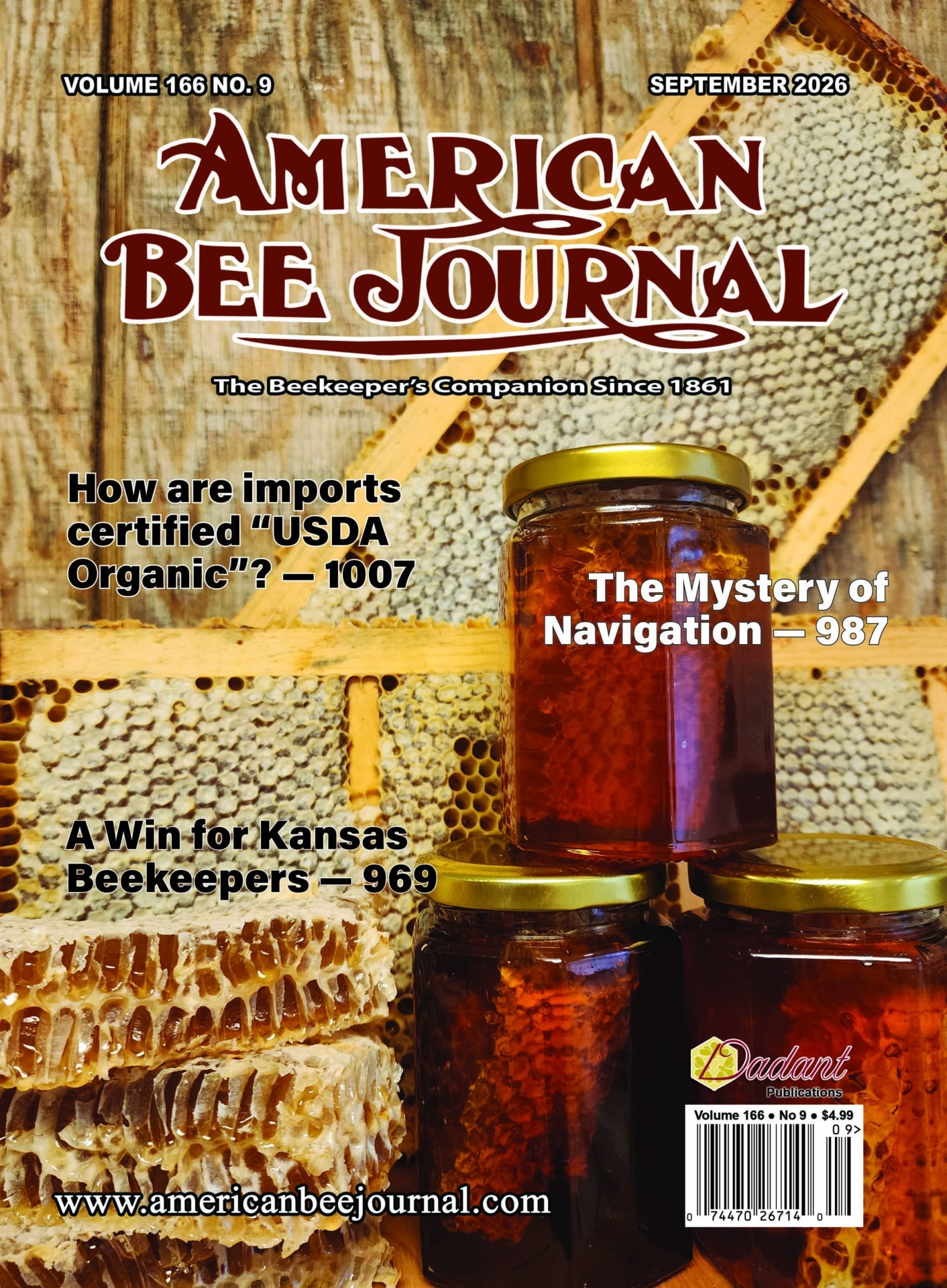

August 2016 Cover
Posted August 1, 2016
August 2016 Cover
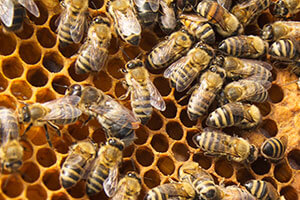
C.F. Wengenroth of Fairfield, CT sent this wonderful photo of a queen and her court. Read his Letter to Editor beginning on page 849.
Read More
C.F. Wengenroth of Fairfield, CT sent this wonderful photo of a queen and her court. Read his Letter to Editor beginning on page 849.
Read MoreHoney bees use their wings to cool down their hives when temperatures rise, but new University of Colorado Boulder research shows that this intriguing behavior may be linked to both the rate of heating and the size of a honey bee group. The findings, which were recently published in the journal Animal Behaviour, indicate that …
Read More
Summer losses rival winter losses for the second year running Beekeepers across the United States lost 44 percent of their honey bee colonies during the year spanning April 2015 to April 2016, according to the latest preliminary results of an annual nationwide survey. Rates of both winter loss and summer loss—and consequently, total annual …
Read More
United States Earlier spring bee foraging and buildup in parts of the Northeast, Mideast and Southeast was at times sporadic due to erratic and often stormy weather. However, later spring and early summer weather improved and the added moisture may help later honey flows. Spring weather in the Southwest was also rainy, but beekeepers were …
Read More
2016 4-H Ag Innovators Experience Kicks Off at Ohio State Honey Bee Challenge helps students understand the connection between honey bees and food production. Columbus, Ohio – Did you know that one in every three bites we eat is the result of honey bees at work? Now, thanks to the 4-H Ag Innovators Experience (AIE), …
Read MoreQ Who is in the Caste? We are debating the correct answer relating to what is a caste? We have a question on our Master Beekeeper test that is at issue. In First Lessons in Beekeeping by Keith Delaplane, a Dadant Publication, he states on page 12: “There are three types of individuals in a …
Read More
Relatively recently, based on genetic evidence, this family has been expanded to include groups not originally considered to be within the family. The treatment below represents the older view of the family. In the older view the family consisted of 3 genera and 270 species[smith] of both annual and perennial herbs. The leaves are mostly …
Read More
The heat of summer brings a dire necessity. The bees need water to cool their hives. Where will they get it and what is the bee biology behind water collection? Those are the subjects for this article. Bees desperate for water will get it from unlikely places. For example, in 1878 during a hot dry …
Read More
Back in March I described a superorganism as a group of individuals that together “does the kinds of things that only organisms do,” and I continued in that issue to describe one of those organism-like things – possession of a “brain” – that is, the capacity for group decision-making. Further back in November 2015 I …
Read More
One of the realities of beekeeping is that honey bees and their colonies are under constant attack from a number of biotic (living) stressors. These include bacteria, fungi, viruses, mites, other insects, spiders, birds, reptiles/amphibians, and mammals. As a result, beekeepers spend considerable time inspecting colonies for and remedying problems related to biotic stressors. State …
Read More