

International Experts Corroborate 15-to-20-Million-Year-Old Honeycomb with Trapped Scavengers found in Dominican Amber
by Hermann Dittrich, NaturalAmber.com
BUENA VISTA, DOMINICAN REPUBLIC — A newly documented fossil specimen of an intact stingless beehive architecture preserved in natural Dominican amber has completely upended a long-held scientific consensus. For decades, paleontologists assumed that an intact, social bee comb structure could not survive the amber-fossilization process. Today, research and visual documentation published by NaturalAmber.com — corroborated by a panel of world-renowned fossil and entomology experts — prove otherwise, revealing a frozen, multi-layered prehistoric scene.
For generations, the scientific community believed that because true honeybees construct their hives using pure wax, the heat and weight of fresh, liquid tree resin would inevitably melt and destroy fragile cell walls before fossilization could occur. This assumption historically led researchers to misidentify distorted fossilized comb structures as degraded wasp nests.
The breakthrough specimen featured on NaturalAmber.com bypasses this geological limitation due to a brilliant intersection of ancient biology, chemistry, and ecology dating back 15 to 20 million years to the Miocene forests of Hispaniola:
- The Cerumen Matrix: The structure was built by the extinct stingless bee (Proplebeia dominicana). Unlike modern honeybees, these ancient pollinators constructed their nests using cerumen — a robust, structural compound made by mixing organic wax with natural plant resins and propolis.
- The Chemical Molecular Fusion: When fresh resin from the extinct Hymenaea protera tree enveloped the nest, the resin-heavy cerumen did not melt. Instead, it formed a perfect, natural chemical bond with the liquid resin, polymerizing over millions of years into an immaculate, un-falsified architectural matrix.
- The Scavenger Forensic Proof: Cementing the authenticity of the specimen is the dramatic presence of fossilized scavengers frozen mid-feed within the comb cells. The inclusion catches ancient parasitic or scavenger organisms (such as scavenger fly larvae or beetles) in the act of infesting the breached hive, providing an undeniable record of an active, decomposing Miocene biological ecosystem just as the resin hit.
Validation by international scientific authorities
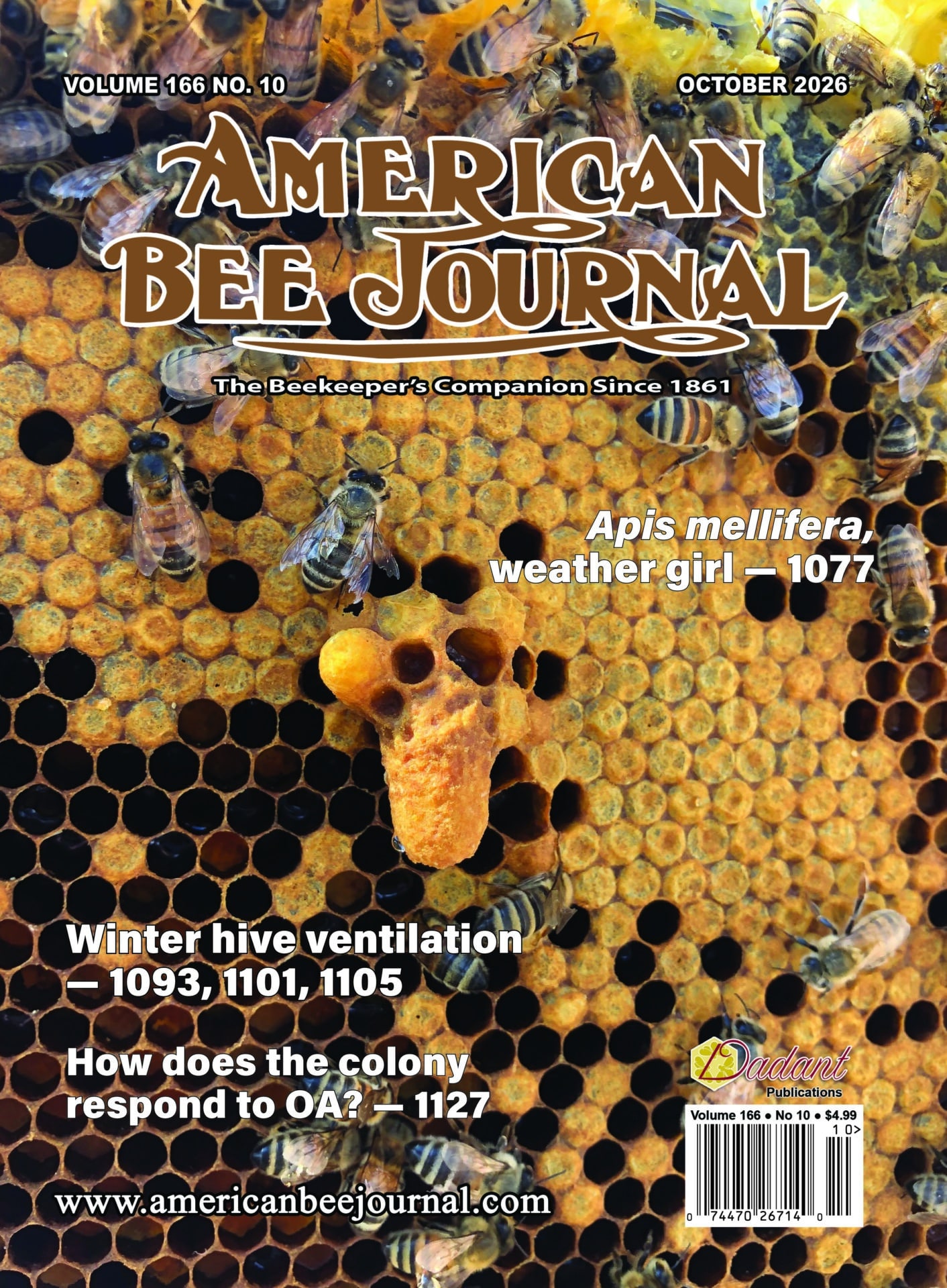
To resolve historical debates regarding whether hexagonal cell structures in resin are bee-made or wasp-made, this specimen was subjected to rigorous evaluation by leading global specialists. A landmark report featured in the European Bee Association Magazine (Issue 10) details the definitive conclusions of a distinguished group of recognized international experts:
- Dr. Wolfgang Weitschat (University of Hamburg, Germany), legendary amber inclusion authority and co-author of the Atlas of Plants and Animals in Baltic Amber.
- Dr. Andrew Ross (Principal Curator of Palaeobiology at National Museums Scotland, formerly of the Natural History Museum, London), a premier global authority on fossilized insects and amber taphonomy.
- Dr. Justin Smith (USA), expert researcher in bee health, architectural structures, and behaviors.
- Dr. George Else (Natural History Museum, London, U.K.), world-renowned expert on bees, wasps, and ancient hymenoptera.
- Dr. Günter Bechly (Stuttgart, Germany), distinguished paleoentomologist specializing in fossil insects and stratification.
This elite panel thoroughly assessed the piece’s taphonomic alignment, confirming that it represents a genuine, naturally integrated Melipona (stingless bee) nest rather than an environmental contamination or a modern hoax. The validation was secured by evaluating the distinctive waxy cerumen melting profile, the precise 10 mm cell scaling (which physically rules out Miocene social wasps), and the natural distribution of the internal scavengers.
“This specimen is the holy grail of trace fossils in resin,” says the team at NaturalAmber.com, who originally identified the piece during routine direct-from-the-mine sourcing. “The peer evaluation of the cell dimensions and the melted cerumen matrix turns this from an architectural curiosity into a dynamic ecological snapshot. It completely exposes the ‘Great Amber Illusion.’ You will never find an authentic, complex ecosystem snapshot like this in Baltic amber, which is routinely subjected to factory autoclaves, clarifying gases, and artificial heat treatments that destroy natural inclusions.”
High-resolution photography, micro-structural analysis, and the full taphonomic breakdown of the fossil beehive and its scavengers are available to journalists, researchers, and collectors directly at NaturalAmber.com.
About NaturalAmber.com:
Operating directly out of Buena Vista, Dominican Republic, NaturalAmber.com is the specialized division of Ambarazul, LLC. Working straight with local miners since the beginning of the century, the platform provides direct-from-the-source procurement while documenting authentic, untreated Dominican amber to protect the integrity of the natural fossil record. Media Contact: Hermann K. Dittrich, hdittrich@gmail.com