

Last month we examined The Beekeepers’ Advance, a journal that flourished briefly in the late 1880s, largely due to its editor James B. Mason. That journal was from the state of Maine in the upper northeast of the country. Now let’s move westward, across the continent, to California and Washington state, and turn the clock forward to the 1920s.
Bees and Honey was established in 1920 by the Alameda California Beekeepers’ Association. Cary W. Hartman was the editor. By November 1922, George W. York became its sole editor and moved the publication to Spokane, Washington, changing its name to “York’s Bees and Honey” (see Figure 1). In January 1924, the name reverted back to “Bees and Honey,” making the issues with York’s name in the title even more rare for a periodical already difficult to find. (I only have three bearing York’s name. As a historical figure, York is influencing your apicultural life at this very moment.) The nomadic life of Bees and Honey continued with issues coming from Seattle, Washington in 1925. Then finally it returned to California in 1930, residing at Alhambra. (The timeline is from Pellet 1938, pg. 141). We need to take a moment to better appreciate this uncertain publication existence.
Today, we mostly do not know of the nomadic one-owner lives of beekeeping periodicals. Historically though, collapse to disappearance seemed looming nearby, even during favorable times. When times turned terrible, printing pages at a loss, advertisement and circulation revenue falling, the steadfast optimistic editor remained, determined to keep the publication going to better times.
One of my favorite editors is the heroic W.Z. Hutchinson of Flint, Michigan, a veteran beekeeper and editor of the Beekeeper’s Review. Hutchinson has taught me things about beekeeping I once considered impossible. He and one of his daughters became ill during the first year of the magazine. For a while, matters became so dire that Hutchinson did the typesetting himself in the front room of his house, which served as publication space and office. The Beekeeper’s Review lived on for years.
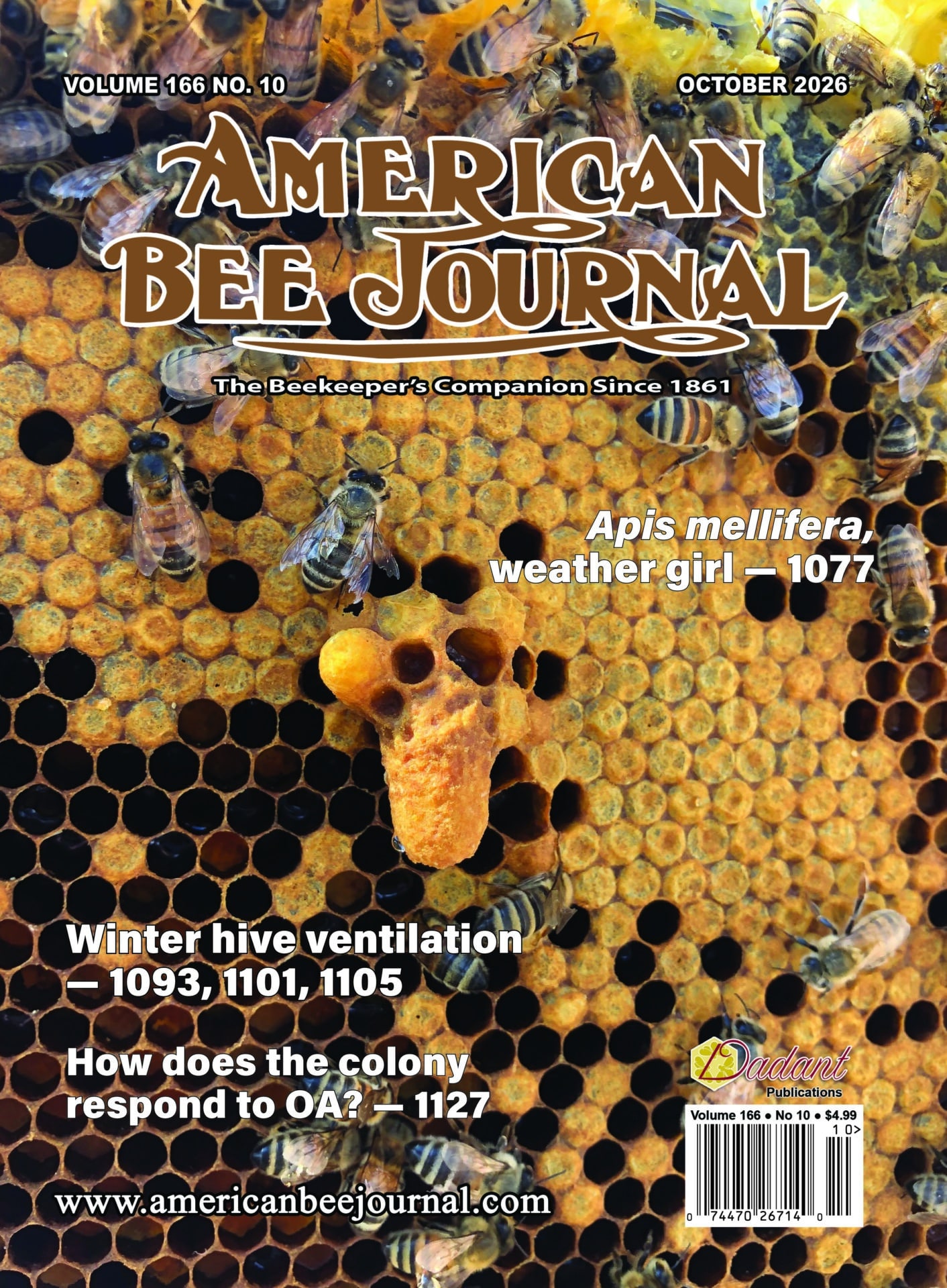
With about 100 bee periodicals started in the U.S., and 10 in Canada, virtually all of them have been long discontinued. Only two survivors remain: American Bee Journal and Bee Culture.After a series of owners beginning in 1861 (and pausing during the Civil War), American Bee Journal had at one time actually been owned by York (for 20 years, 1892-1912). He sold it to Dadant & Sons, the current owners.
Dadant & Sons has been a multigenerational family of beekeepers with a well-known and respected bee-supply business. Comb foundation was their early premier product. (That was when beekeepers generally distrusted wax as being adulterated. If made of adulterated wax, a foundation sheet will usually fall out of the frame, the adulterated wax not able to withstand the heat of the hive. On a couple of encounters, I witnessed history repeat itself when helping low-income beekeepers in rural developing countries. They were trying to acquire straighter and stronger combs with less drone comb. As an apicultural historian, I was already prepared to discuss the adulterated foundation problem at length, including possible solutions.) …